Last updated - July 7, 2026
For an e-commerce store, the most important thing to focus on is just one: increasing sales. Multiplying e-commerce sales every quarter is essential to grow the business. To ensure sales, your brand needs more than just traffic. It needs a loyal customer base, an easy checkout process, and affordable shipping rates. These are a few factors that can help increase sales with ease.
When a customer views your brand, the key to driving your business’s growth is getting them to return to buy again. Now, to increase online sales for your business, you can solve several issues like slow-loading pages, complicated checkouts, poor product descriptions, and even hidden shipping costs. While these can prevent shoppers from completing their purchases, you can easily solve these to grow your business. Optimizing your website, improving the customer experience, and streamlining your fulfillment process can significantly boost conversions and revenue.
In this guide, we’ll explore 10 simple yet effective ways to increase e-commerce sales!
Why E-commerce Sales Matter More Than Website Traffic
Many businesses tend to focus on increasing traffic and visibility through different strategies, such as social media campaigns, paid ads, and SEO boosting. As important as traffic is for the success of your e-commerce business, increasing online sales needs more than that. Traffic alone isn’t the generator for revenue.
Imagine receiving 10,000 visitors each month, but only 100 of them make a purchase. That’s a 1% conversion rate. Now imagine improving your conversion rate to just 2%. Without spending an extra dollar on advertising, you’ve doubled your online sales.
This is why successful ecommerce brands focus on optimizing every stage of the customer journey.
Some of the most important ecommerce performance metrics include:
- Conversion Rate: The percentage of visitors who complete a purchase.
- Average Order Value (AOV): The average amount customers spend per order.
- Customer Lifetime Value (CLV): The total revenue a customer generates over their relationship with your business.
- Repeat Purchase Rate: The percentage of customers who return to buy again.
The average online shopping cart abandonment rate is nearly 70%, which means that most shoppers leave without even completing their purchase. If your business is able to recover even a small percentage of these abandoned carts, it can have a substantial impact on revenue. Rather than chasing more visitors, improving your store’s user experience often delivers a much higher return on investment.
Let’s take a look at how you can boost online sales for your business!
10 Simple Ways to Increase E-Commerce Sales
1. Optimize Your Product Pages
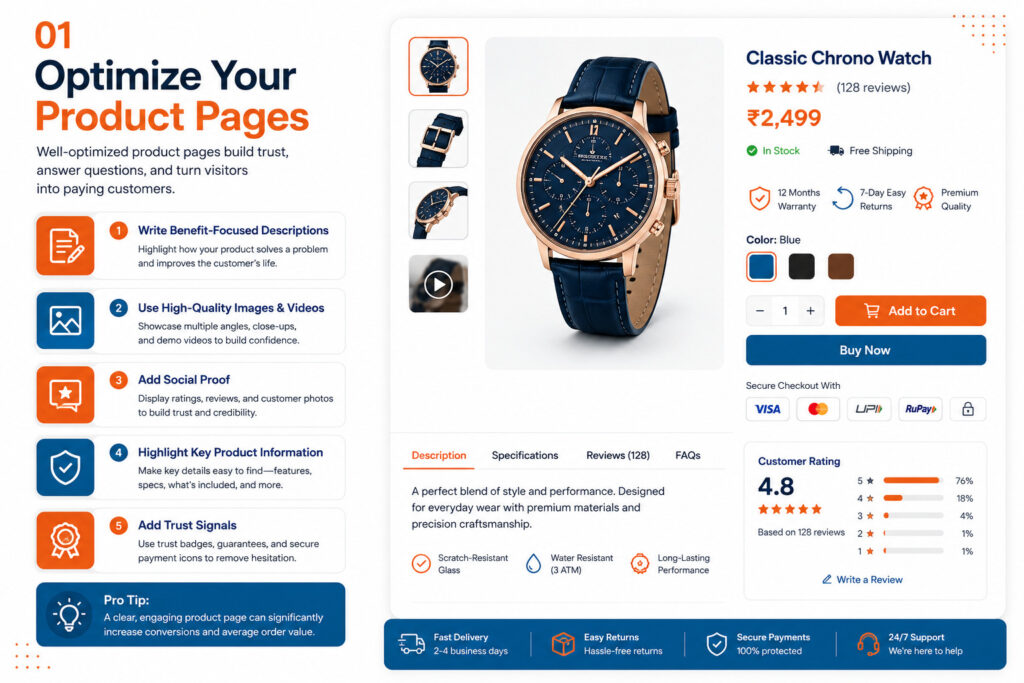
Your product page is your digital salesperson. If it fails to answer customer questions or build confidence, visitors are unlikely to make a purchase.
A high-converting product page should include:
Write Benefit-Focused Product Descriptions
Instead of simply listing technical specifications, explain how your product solves a customer’s problem or improves their life.
For example, instead of saying:
“Made from stainless steel.”
Say:
“Crafted from durable stainless steel that resists rust and lasts for years of daily use.”
Focus on benefits before features.
Use High-Quality Images and Videos
Customers can’t physically inspect products online, so visuals play a crucial role in purchase decisions.
Include:
- Multiple product angles
- Lifestyle images
- Zoom functionality
- 360-degree product views (where possible)
- Short demonstration videos
If you’re running a WooCommerce store, product videos can make a real difference – they let shoppers see how an item looks and works before buying, which builds confidence and reduces returns. A dedicated plugin like Video Gallery for WooCommerce adds videos straight into the product gallery, so customers can watch demonstrations without ever leaving the page. It supports self-hosted files as well as YouTube and Vimeo, so you can use whatever you already have.
Showing products in real-life settings helps customers visualize ownership and increases purchase confidence.
Add Social Proof
Customer reviews, ratings, and testimonials help eliminate uncertainty.
Include:
- Star ratings
- Verified buyer reviews
- Customer photos
- Frequently Asked Questions
- User-generated content
Products with authentic reviews often outperform those without them because shoppers trust other customers more than marketing copy.
Highlight Trust Signals
Reduce buyer hesitation by displaying:
- Secure payment badges
- Money-back guarantees
- Warranty information
- Free return policies
- Delivery estimates
Trust signals reassure customers that purchasing from your store is safe and reliable.
2. Simplify Your Checkout Process
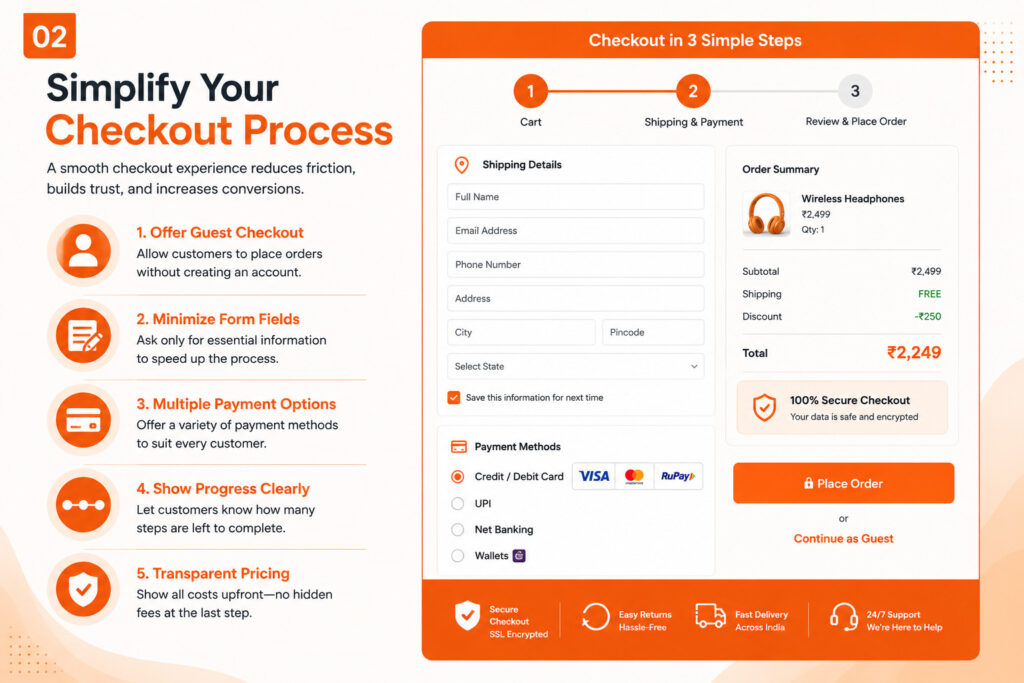
Even customers who are ready to buy may abandon their carts if checkout feels complicated.
Every unnecessary step creates friction.
To improve conversions:
Offer Guest Checkout
Forcing customers to create an account often leads to abandoned purchases.
Allow visitors to complete their purchase first, then invite them to create an account afterward.
Minimize Form Fields
Only necessary request information.
For example:
- Name
- Shipping address
- Contact information
- Payment details
Avoid asking for unnecessary details that slow the process.
Provide Multiple Payment Options
Different customers prefer different payment methods.
Consider offering:
- Credit and debit cards
- Digital wallets
- Buy Now, Pay Later (BNPL) services
- Regional payment methods
More payment flexibility means fewer abandoned checkouts.
Display Checkout Progress
Progress indicators let customers know how many steps remain.
A simple progress bar reduces uncertainty and encourages users to complete the purchase.
Show Total Costs Upfront
Unexpected shipping fees are among the leading reasons customers abandon carts.
Be transparent about:
- Shipping costs
- Taxes
- Delivery timelines
No one likes unpleasant surprises at the final step.
3. Improve Website Speed
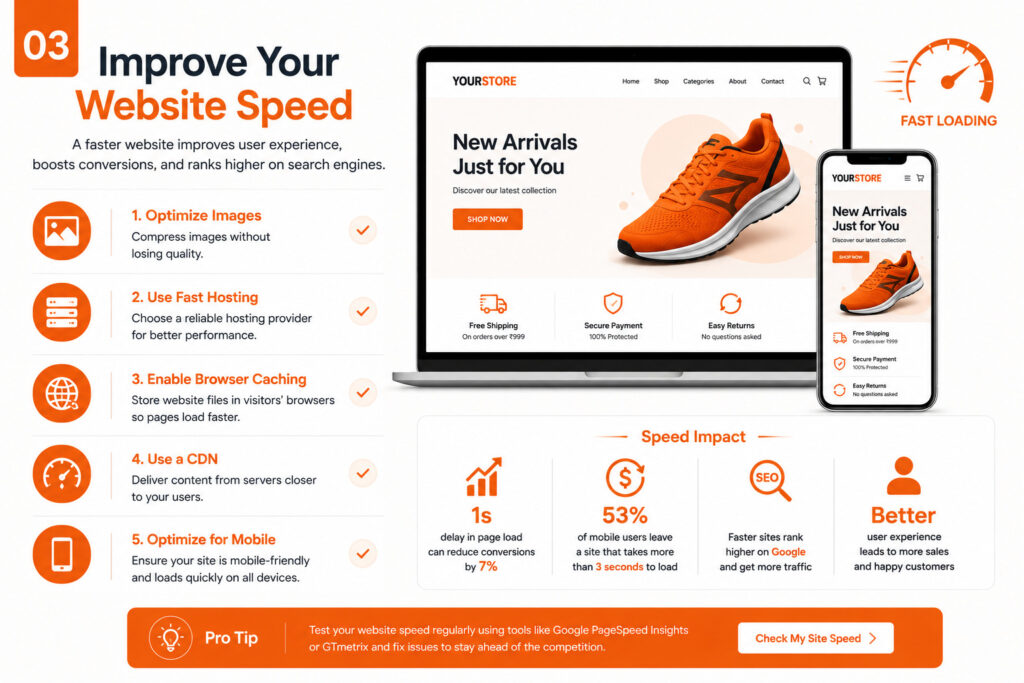
Website speed has a direct impact on customer satisfaction, search rankings, and conversion rates.
Today’s shoppers expect websites to load almost instantly. Even small delays can cause visitors to leave before viewing your products.
Common ways to improve site performance include:
Compress Images
Large image files significantly slow page loading.
Use optimized image formats without sacrificing quality.
Enable Browser Caching
Caching allows returning visitors to load pages faster by storing website resources locally.
Use a Content Delivery Network (CDN)
A CDN distributes your website content across multiple servers, reducing loading times for customers worldwide.
Optimize Mobile Performance
Most e-commerce traffic now comes from smartphones.
Ensure your website:
- Loads quickly on mobile devices
- Has responsive layouts
- Uses readable fonts
- Includes large, easy-to-tap buttons
Monitor Core Web Vitals
Google considers page experience when ranking websites.
Pay attention to:
- Largest Contentful Paint (LCP)
- Interaction to Next Paint (INP)
- Cumulative Layout Shift (CLS)
Improving these metrics not only enhances user experience but also supports your SEO efforts.
4. Build Trust with Social Proof
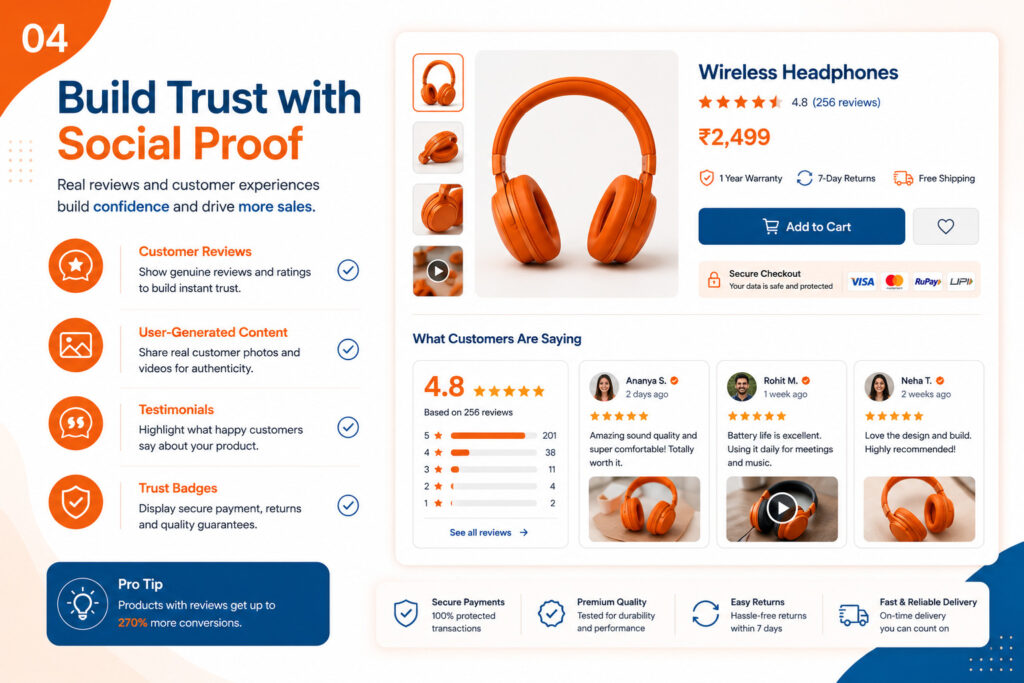
When shopping online, customers can’t see or touch products before buying. This uncertainty makes trust one of the biggest factors influencing purchasing decisions. Social proof helps reassure shoppers that others have had positive experiences with your brand.
Encourage Customer Reviews
Reviews provide honest feedback from previous buyers and help answer common questions potential customers may have. Encourage customers to leave reviews after their purchase by sending follow-up emails or offering loyalty points for feedback.
Showcase User-Generated Content
User-Generated Content is basically content in the form of photos and videos that are shared by real customers on their social media. It allows e-commerce businesses to create authenticity. Featuring customer images on product pages or social media demonstrates how products look and perform in real-world situations.
Display Ratings and Testimonials
Highlight star ratings, customer testimonials, and success stories throughout your website. Positive experiences from satisfied customers can significantly influence purchasing decisions.
Leverage Trust Badges
Display certifications, secure payment icons, return guarantees, and verified business badges. These visual cues reassure customers that their payment information is secure and that your business is legitimate.
5. Personalize the Shopping Experience
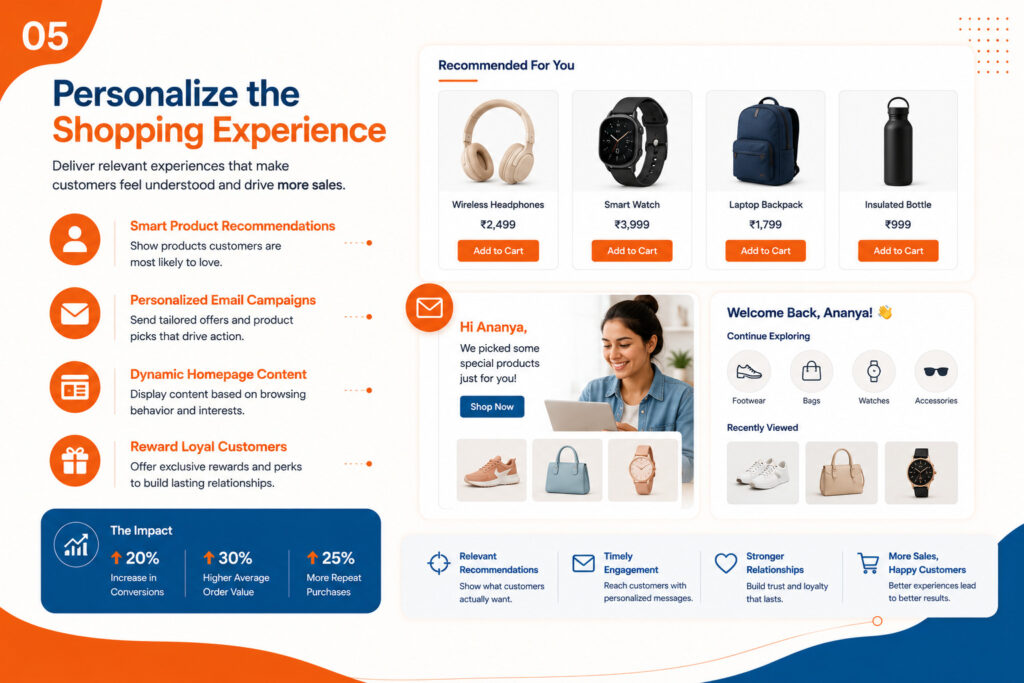
Modern shoppers expect more than a one-size-fits-all shopping experience. Personalization helps customers discover products they’re more likely to purchase, improving both conversion rates and average order value.
Recommend Relevant Products
Use browsing history and purchase behavior to recommend products that customers may find useful. Suggestions such as “You May Also Like” or “Frequently Bought Together” encourage additional purchases.
Send Personalized Email Campaigns
Instead of sending the same email to every subscriber, segment your audience based on their interests and shopping behavior. Personalized recommendations, birthday discounts, and replenishment reminders create more engaging customer experiences.
Offer Dynamic Homepage Content
Returning visitors appreciate seeing recently viewed products, recommended categories, or promotions tailored to their preferences. Personalized homepages make shopping more convenient and increase engagement.
Reward Loyal Customers
Loyalty programs that offer exclusive discounts, early access to new products, or reward points encourage repeat purchases and strengthen customer relationships. Loyalty programs can help improve e-commerce sales considerably, as it motivates customers to buy from your brand.
6. Recover Abandoned Carts
Cart abandonment is one of the biggest challenges for e-commerce businesses. It can impact your e-commerce sales negatively if it is not corrected. Many customers add products to their cart but leave before completing the purchase due to unexpected costs, distractions, or second thoughts. Preventing customers from having this experience or ensuring they return to your business will increase your online sales immensely.
Fortunately, many abandoned sales can be recovered with the right strategies.
Send Automated Cart Recovery Emails
A well-timed email reminding customers about the items left in their cart can encourage them to return. Include product images, pricing, and a clear call-to-action to complete the purchase.
Use SMS Reminders
For customers who have opted in, SMS reminders often achieve higher open rates than emails. Keep messages concise and include a direct checkout link.
Offer Limited-Time Incentives
If a customer hasn’t completed their purchase after multiple reminders, consider offering a small discount or free shipping. Limited-time offers create urgency and motivate action.
Display Exit-Intent Popups
Exit-intent popups appear when visitors are about to leave your website. Offering a discount code, free shipping, or an exclusive promotion at this moment may persuade customers to stay and complete their purchase.
7. Offer Free Shipping
Shipping costs play a major role in purchasing decisions. So, how can it impact e-commerce sales? Basically, customers can become daunted by seeing prices that are new or weren’t there before. Unexpected fees at checkout are one of the leading causes of cart abandonment.
So, creating a transparent checkout process ensures that your customer will continue to buy from your business.
Set a Free Shipping Threshold
Instead of offering free shipping on every order, encourage customers to spend more by setting a minimum order value.
For example:
“Spend ₹999 more to qualify for free shipping.”
This strategy increases average order value while helping offset shipping expenses.
Be Transparent About Costs
Display shipping charges and estimated delivery times early in the shopping journey. Transparency builds trust and reduces surprises during checkout.
Offer Multiple Delivery Options
Different customers have different priorities. Some prefer faster delivery, while others prioritize lower shipping costs. Providing multiple shipping options improves the overall shopping experience.
Partner with Reliable Shipping Providers
Late deliveries and damaged packages negatively affect customer satisfaction. Working with dependable logistics partners ensures timely deliveries and enhances your brand reputation.
8. Upsell and Cross-Sell Relevant Products
Upselling and cross-selling are effective ways to increase revenue without acquiring new customers. These are two interesting ways you can improve your e-commerce sales.
Upselling
Encourage customers to purchase a premium version of the product they’re already considering.
Example:
- Basic Coffee Machine → Premium Coffee Machine with Additional Features
Cross-Selling
Recommend complementary products that enhance the customer’s purchase.
Examples include:
- Smartphone → Protective Case
- Laptop → Wireless Mouse
- Camera → Memory Card
- Running Shoes → Sports Socks
Create Product Bundles
Bundles offer customers better value while increasing average order value. A skincare bundle or home office package, for example, can generate higher sales than individual products sold separately.
9. Optimize for Mobile Shoppers
Mobile devices account for a significant portion of e-commerce traffic, making mobile optimization essential rather than optional.
Use Responsive Design
Your website should automatically adapt to different screen sizes while maintaining a consistent user experience.
Simplify Navigation
Keep menus clean and intuitive. Make it easy for users to browse categories, search for products, and access their shopping cart.
Improve Mobile Checkout
Reduce typing by enabling autofill, digital wallets, and one-click payment options where available.
Ensure Fast Loading Speeds
Mobile users often browse using slower network connections. Compress images, reduce unnecessary scripts, and optimize page performance to improve loading times.
A seamless mobile experience encourages shoppers to complete purchases instead of abandoning your site.
10. Use Email Marketing to Bring Customers Back
Many businesses are not aware of the power of email marketing. Emails are one of the most common methods of communication that hook customers. 59% of consumers say marketing emails influence their purchase decisions. So if you’re looking to create a loyal customer base and retain them, then email marketing would help with your e-commerce sales immensely.
Acquiring a new customer is often more expensive than retaining an existing one. Email marketing helps nurture customer relationships and encourages repeat purchases.
Welcome New Subscribers
Introduce your brand, share your best-selling products, and offer a first-purchase discount to encourage conversions.
Send Product Recommendations
Recommend products based on previous purchases or browsing history to keep customers engaged.
Launch Seasonal Campaigns
Promote holiday sales, limited-time offers, and new product launches through targeted email campaigns.
Re-Engage Inactive Customers
Reach out to customers who haven’t purchased recently with exclusive offers, personalized recommendations, or reminders about your latest collections.
Consistent email communication keeps your brand top of mind and increases customer lifetime value.
Bonus Tips to Increase E-commerce Sales Even Faster
While the strategies above provide a strong foundation, these additional tactics can further improve your results:
- Add live chat or AI chatbots to answer customer questions instantly.
- Create a referral program that rewards customers for bringing in new buyers.
- Introduce loyalty programs to encourage repeat purchases.
- Use countdown timers for limited-time promotions.
- Offer wishlists so customers can save products for future purchases.
- Retarget previous website visitors through paid advertising campaigns.
- Optimize your website for voice search and AI-powered product discovery.
Common Mistakes That Hurt E-commerce Sales
While running your e-commerce business, several things can go wrong. Avoiding these common mistakes would ensure that you can increase conversions;
- Slow-loading pages
- Low-quality product images
- Weak or generic product descriptions
- Hidden shipping fees
- Complicated checkout processes
- Lack of customer reviews
- Poor mobile optimization
- Limited payment options
- No post-purchase communication
- Ignoring customer feedback
Regularly reviewing your store’s performance helps identify and resolve these issues before they impact your e-commerce sales.
How to Measure Whether Your Sales Strategies Are Working
To measure the efficiency of your strategies, you need to be measuring the right metrics. Regular monitoring and evaluation would allow you to observe the efficacy of the methods being used and witness an increase in online sales.
Key performance indicators include:
| Metric | What it measures |
|---|---|
| Conversion Rate | Measures how many visitors become customers. |
| Average Order Value (AOV) | Shows how much customers spend per purchase. |
| Customer Lifetime Value (CLV) | Indicates long-term customer profitability. |
| Cart Abandonment Rate | Identifies checkout issues that need improvement. |
| Repeat Purchase Rate | Measures customer loyalty. |
| Revenue Per Visitor | Evaluates the effectiveness of your website. |
| Customer Acquisition Cost (CAC) | Helps determine marketing efficiency. |
Regularly analyzing these metrics allows you to make informed decisions and continuously optimize your e-commerce store.
Conclusion
Increasing e-commerce sales is about relying on every strategy that works for your business. It’s about creating a seamless shopping experience that guides customers from discovery to checkout while building trust at every stage. To begin optimizing your business, you start small and figure out your way from there. Focus on ensuring that the product pages are perfect, and the checkout process is simple. From there, you can build credibility through online reviews and feedback.
At the end of the day, increasing sales is through nurturing a strong relationship with your customers. To boost your online sales, you must utilize marketing strategies to build your brand with the audience.
Remember, even small improvements can compound over time. A faster website, clearer product descriptions, or a more streamlined checkout process can collectively lead to higher conversion rates, increased customer satisfaction, and sustainable revenue growth.
Start implementing these strategies today, monitor your performance metrics, and continue testing new ideas. With consistent optimization, your e-commerce store will be well-positioned for long-term success.
FAQS
1. How can I increase e-commerce sales quickly?
Start by optimizing your product pages, simplifying the checkout process, recovering abandoned carts, and offering transparent shipping options. These changes can improve conversions without increasing your marketing spend.
2. What is a good e-commerce conversion rate?
While conversion rates vary by industry, many e-commerce stores aim for a rate between 2% and 4%. Continuously testing and optimizing your website can help improve performance over time.
3. Does free shipping really increase sales?
Yes. Free shipping is one of the strongest purchase incentives for online shoppers. Setting a minimum order threshold can also increase your average order value.
4. Why are customer reviews important?
Customer reviews build trust, answer common questions, and provide social proof, making shoppers more confident in their purchasing decisions.
5. Should small e-commerce businesses invest in personalization?
Absolutely. Even simple personalization, such as product recommendations and targeted email campaigns, can significantly improve customer engagement and repeat purchases.
6. How can shipping improve customer satisfaction?
Fast, reliable shipping with real-time tracking, accurate delivery estimates, and transparent pricing creates a better customer experience and encourages repeat business.